As a busy restaurant owner, you know how crucial a good meat slicer is. These machines are key to your kitchen, making sure your meats are perfectly sliced. But have you thought about how to keep your slicer in top shape?
Let’s look at Manconi, a company that’s been making top-notch meat slicers for over sixty years. Their focus on quality and detail has earned them a solid reputation. By following their advice, you can keep your slicer running smoothly for years.
Key Takeaways
- Proper maintenance can significantly extend the lifespan of your meat slicer
- Regular cleaning and blade sharpening are essential for optimal cutting performance
- Using the right lubricants and cleaning solutions can prevent costly repairs
- Proactive care helps maintain food safety and compliance with health standards
- Investing in regular maintenance is a smart way to protect your slicer investment
Understanding Your Meat Slicer
To keep your meat slicer in top shape, you need to know its parts and how they work. Meat slicers vary, from manual to semi-automatic, each with special features. It’s key to understand the blade, product tray, thickness control, and sharpening stones for maintenance and best performance.
Types of Meat Slicers
Light-duty meat slicers are for light use, best for up to an hour a day. They can’t handle frozen items. Medium-duty slicers are for more use, up to several hours, but not for continuous slicing.
Heavy-duty meat slicers are for big restaurants, slicing frozen items, but cost more. They’re built for heavy use.
Key Components to Know
Electric deli meat slicers cost more, starting at $200 for commercial models. Manual meat slicers are cheaper, under $100, good for home use. Knowing how to use these parts safely is important.
Choosing the right products for your slicer prevents damage to the blade and other slicer components.
“Thorough cleaning and sanitizing are crucial for maintaining a meat slicer, with users advised to clean every crevice from the carriage surface to the blade cover, to ensure safe usage.”
| Slicer Type | Recommended Use | Slicing Capabilities | Price Range |
|---|---|---|---|
| Light-duty | Low-volume, up to 1 hour per day | Not suitable for frozen items | N/A |
| Medium-duty | Small-scale operations, up to several hours per day | Not suitable for continuous slicing, up to 30 minutes at a time | N/A |
| Heavy-duty | Large restaurants, frequent use | Durable, can slice through frozen items | More expensive |
| Electric Deli | Commercial-grade, for frequent use | Suitable for a variety of slicing tasks | $200+ |
| Manual | Light home use | Limited slicing capabilities | Under $100 |
Importance of Regular Maintenance
Regular care of your meat slicer is key. It keeps food safe, makes your equipment last longer, and ensures even slices. Fixing problems early saves money and keeps your kitchen running smoothly.
Benefits of Proper Care
Cleaning your meat slicer often is vital. FDA rules say to clean it every 4 hours if it’s always in use. Cleaning after each use stops oils and food bits from building up. A deep clean at the end of the day gets rid of all dirt.
Avoiding Common Issues
- Following the maker’s cleaning and upkeep tips is crucial for your slicer’s performance and life.
- Sharpening the blade regularly with the right stone keeps it sharp and working well.
- Check the slicer’s parts, like the ring guard mount and blade guard, for damage and replace them if needed.
- Look for any damage to the slicer’s seams, seals, and gaskets to keep it working right.
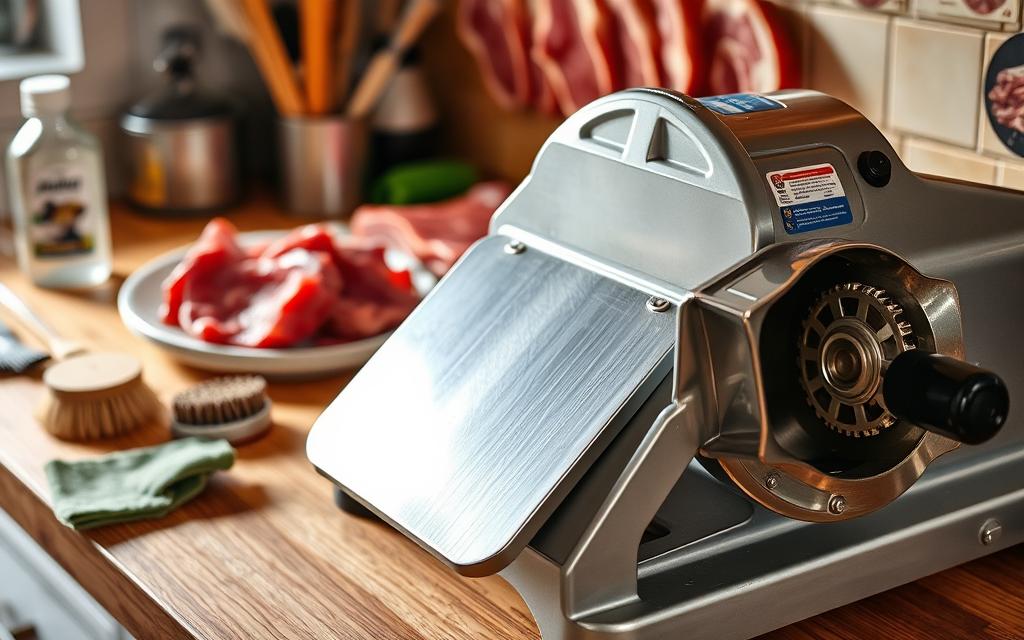
By fixing problems early and keeping up with maintenance, you avoid dull blades, rust, and breakdowns. This keeps your meat slicer in top shape for many years.
Cleaning Your Meat Slicer
Keeping your meat slicer clean is key for food safety and to make your equipment last longer. Cleaning it involves daily routines and deeper cleaning methods.
Daily Cleaning Routine
After each use, employees should do a quick clean. This is at least once a day. They should wipe down the slicer when switching between meats and cheeses to avoid contamination.
Trained staff should also clean the slicer more if it’s used for over four hours a day.
Deep Cleaning Techniques
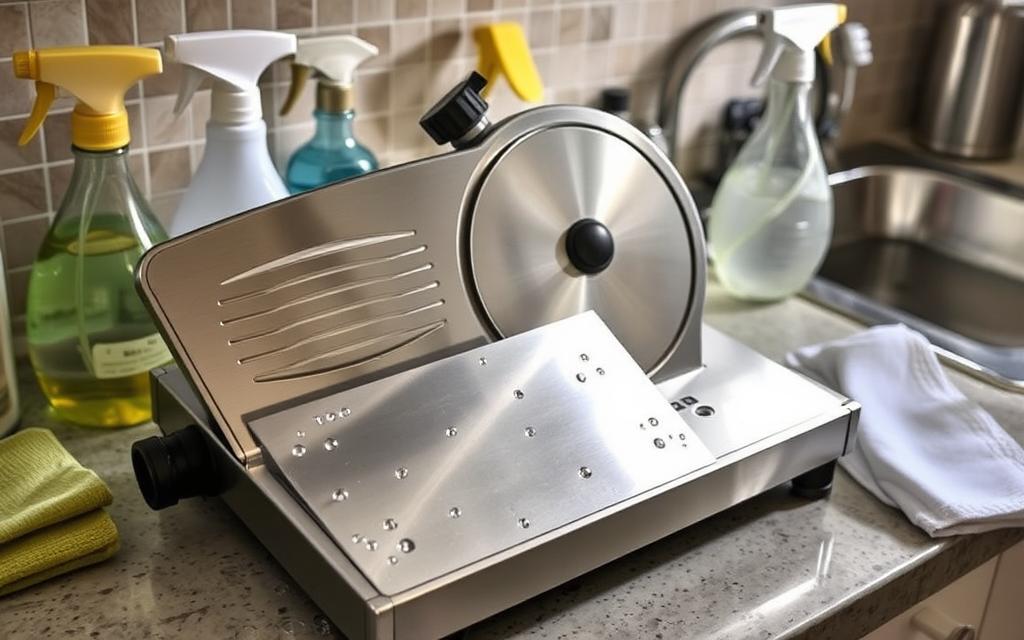
Deep cleaning the slicer is needed every day it’s used. This means taking it apart and cleaning each part with the right solutions. Never use a dishwasher, as it can rust and damage the slicer.
Always follow the manufacturer’s cleaning instructions and local health codes.
| Cleaning Recommendation | Frequency |
|---|---|
| Light Cleaning | After every use, at least once per day |
| Multiple Light Cleanings | If used for more than 4 hours per day |
| Deep Cleaning | At the end of every day of use |
Regular cleaning and upkeep can extend your meat slicer’s life and boost its performance. By sticking to these cleaning tips, your slicer will stay in great shape. It will also provide safe, quality sliced meats for your customers.
Sharpening the Blade
The blade of your meat slicer needs regular sharpening to work well and safely. Keeping the blade sharp is key for quality slices and safety. It helps avoid accidents and food illnesses.
When to Sharpen the Blade
How often you sharpen the meat slicer blade depends on how much you use it. Sharpen it every four hours or when the slices aren’t as good. Not sharpening enough can make slices worse and waste more food.
How to Sharpen Safely
- Always clean the blade before sharpening to avoid stone contamination.
- Wear cut-resistant gloves to protect your hands while sharpening.
- Follow the maker’s sharpening guide for safety and effectiveness.
- Clean the blade well after sharpening to remove metal bits.
- Check for blade wear and replace it if needed to keep the slicer aligned.
Keeping the blade sharp is vital for food safety and quality. By sharpening your meat slicer blade right, you get a reliable appliance. It will give you safe, consistent slices every time.

| Frequency of Blade Sharpening | Slicer Usage |
|---|---|
| Every 2 weeks | Commercial slicers in constant use |
| 1 month to several months | Home slicers used occasionally |
“Hundreds of people in the U.S. die every year from foodborne illnesses, often caused by bacteria such as Listeria monocytogenes, commonly found in raw meat and soft cheese. Proper maintenance of your meat slicer, including regular cleaning and blade sharpening, is crucial for preventing cross-contamination and the spread of diseases.”
Lubricating Moving Parts
Proper lubrication is key for your meat slicer’s smooth and long-lasting use. Use only approved lubricants or food-grade mineral oil. Cooking oils or sprays can gum up the slicer and make it stiff.
Choosing the Right Lubricant
For your meat slicer, pick a food-grade lubricant made for food processing equipment. It’s safe for food contact and won’t harm your food. Don’t use general-purpose oils or greases, as they might not be safe for food prep.
Lubrication Schedule
- Lubricate slide valves, bushings, and other moving parts regularly to prevent stiffness and ensure smooth operation.
- Follow the manufacturer’s recommended lubrication schedule, which may vary depending on the model and usage of your slicer.
- Apply lubricant sparingly to avoid excess buildup, and clean the parts thoroughly before applying fresh lubricant.
Stick to a consistent slicer maintenance schedule and use the right food-grade lubricant. This will help your meat slicer last longer and work better in your kitchen.
“Proper lubrication of the slide rod with mineral oil-based lubricant is essential.”
| Lubrication Frequency | Benefits |
|---|---|
| Regular Lubrication | Ensures smooth operation, prevents stiffness, and extends the lifespan of the slicer. |
| Manufacturer-Recommended Schedule | Follows the guidelines set by the slicer manufacturer for optimal performance and safety. |
| Sparing Application | Avoids excess buildup that can lead to issues like the slicer becoming inoperable. |
Preventing Rust and Corrosion
Keeping your meat slicer in good shape is key. Storing it right and using covers can help a lot. This keeps your equipment working well for a long time.
Storage Tips for Longevity
Store your meat slicer in a dry, airy place. This stops moisture from causing rust and corrosion. Make sure all parts are dry before putting it away. If your slicer has aluminum parts, clean off food quickly to avoid corrosion.
Protective Covers: Your Slicer’s Shield
Using good covers for your meat slicer when not in use is smart. These covers protect it from dust, moisture, and damage. Always check the manufacturer’s advice for the right cover for your slicer.
Following these storage tips and using covers can really help. This way, your meat slicer stays in great shape for many years. It will work better and last longer.

Checking Electrical Components
Keeping your meat slicer’s electrical safety and integrity is key for its long life and your safety. Always unplug the slicer before cleaning or maintenance to avoid dangers.
Safety Precautions
First, check the power cord for fraying, damage, or loose connections. Make sure all plug connections are secure to avoid electric shock. Also, check the switches and controls to see if they work right without problems.
Routine Inspections
- Regularly check the slicer’s electrical parts for any issues early on.
- Keep all electrical parts dry and clean to ensure they work well and safely.
- Have a professional inspect the internal electrical systems as the manufacturer suggests to keep everything working right.
Deal with any electrical problems right away to avoid safety risks and equipment failures. Proper slicer electrical safety and electrical component inspection are vital for your meat slicer’s long life and reliable use.
Troubleshooting Common Problems
Keeping your meat slicer in great shape is key for top-quality, safe meat slices. But, sometimes problems pop up. It’s important to spot these issues early and fix them fast to avoid big problems.
Identifying Issues Early
Look out for signs like uneven slices, a wobbly blade, or trouble adjusting the thickness. Uneven slices might mean a dull or off-kilter blade. A wobbly blade could be due to loose parts or worn-out bearings. Trouble adjusting often comes from food bits clogging the mechanisms.
Simple Fixes You Can Try
- Make sure the blade is sharp and clean. A dull or dirty blade can cause uneven slices.
- Check the blade mount and tighten any loose parts to fix wobbling.
- Clean the slicer well to get rid of food debris blocking adjustments.
- Use the right lubricant on moving parts for smooth operation.
If these simple steps don’t solve the problem, it’s time to call a pro. A meat slicer technician can find and fix complex issues. They’ll keep your equipment working well for a long time.
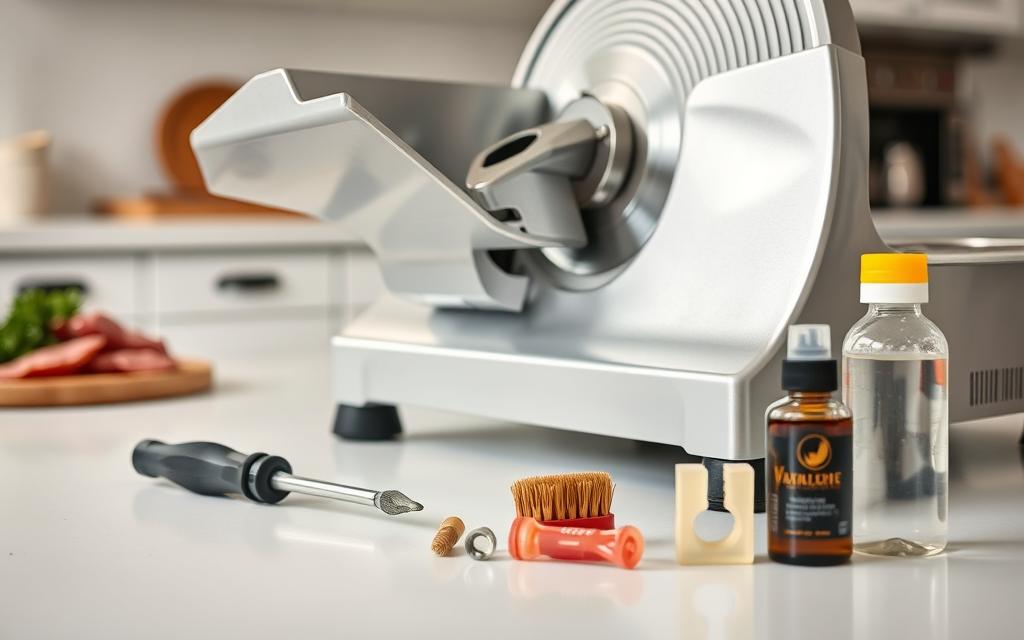
“Proper maintenance and quick problem-solving are the keys to keeping your meat slicer running at its best.”
Tips for Proper Use
Learning how to use a meat slicer right is key to making it last longer and stay safe. When using a meat slicer, it’s important to use the right techniques. Also, don’t overload the machine.
Techniques for Slicing
Use the right amount of pressure when slicing. This helps avoid straining the motor. For semi-automatic slicers, keep an eye on the machine to prevent it from moving off the counter.
Adjust the slice thickness for different foods. This makes the slicer work better and more efficiently.
Avoiding Overloading the Machine
- Don’t put too much in the slicer, like big or frozen items. This can harm the motor and damage the inside parts.
- Make sure everyone knows how to use the slicer correctly and safely. This keeps things consistent and safe.
- Always watch the slicer when it’s on. Turn it off when you’re not using it.
By following these tips for proper slicer use, you can make your meat slicer last longer. You’ll also have a safer and more efficient way to slice food. For more tips, check out our guide on maintaining and using a meat slicer.
“Proper use of a meat slicer is essential for maximizing its performance and ensuring the safety of both the operator and the food being prepared.”
Professional Maintenance Services
Keeping a meat slicer in top shape needs more than just cleaning and basic care. For big repairs, overhauls, and detailed checks, it’s wise to get help from pro slicer maintenance services. These experts make sure your slicer works well and safely for many years.
When to Call a Technician
If your slicer has ongoing mechanical or electrical troubles, or needs new parts, call a pro. Regular maintenance can make your slicer last longer and work better. If you see any odd changes in how it works, get an expert’s help right away.
What to Expect from a Service
- Comprehensive inspection of all components
- Deep cleaning of internal parts and mechanisms
- Calibration and adjustments for optimal performance
- Repair or replacement of worn or damaged parts
- Thorough testing to ensure proper functioning
Professional slicer repair services are key to keeping your slicer in great shape. By letting trained technicians handle your slicer, you know any problems will be fixed right. This ensures your slicer will keep running smoothly for years.
Conclusion: Keeping Your Meat Slicer in Top Shape
Maintaining a meat slicer needs regular care and attention. Clean it often, lubricate it properly, sharpen the blade when needed, and follow the manufacturer’s guidelines. This ensures your slicer lasts long and works well.
Proper maintenance is an investment in your equipment’s efficiency and your business’s success. Clean your slicer, sharpen the blade, and fix issues quickly. This extends your machine’s life and keeps it running smoothly. Always check your user manual for specific maintenance instructions. If unsure, consider professional maintenance services.
Keeping your meat slicer in good condition is crucial for food safety and consistent slicing. By focusing on maintenance, you get a reliable, long-lasting slicer. This supports your kitchen operations and helps your business grow.
Leave a Reply